

Signal Dept Edition 7
"...a signal in the noise..."

In this Edition:
- Artist Spotlight: Veranda Panda
- Feature: Headphones Part 1 - A Music Listener’s Perspective
- Signal Scan Track Notes
Welcome to Signal Dept.
You're reading a classified leak. Or maybe it's a public service announcement. Either way, welcome.
Signal Dept. is a curated electronic music digest that focuses on music emerging from independent scenes—experimental releases, overlooked producers, and sounds that develop outside mainstream attention. Each edition explores electronic music communities through playlists, artist interviews, and cultural analysis, examining how creative work gets made and shared in different contexts.
We approach electronic music as both artistic practice and cultural phenomenon. Production techniques matter alongside the communities that support them. Label aesthetics reveal something about the audiences they serve. The spaces artists perform in, the tools they use, and the networks they build all influence the music we hear. Our coverage moves between close listening and broader cultural observation.
The publication includes YouTube playlists, three-question artist interviews, track commentary, and periodic investigations into developments that illuminate something significant about contemporary music culture. Rather than chasing trends or optimizing for discovery algorithms, we focus on creating connections between artists, listeners, and communities that might otherwise remain separate.
Signal Dept. operates as a human-filtered resource for people interested in electronic music beyond the most visible releases and established scenes.
Artist Spotlight: Veranda Panda

Location: Durban, South Africa
Sound: Live Electronic, Afro-House, Genre-Fusion
Format: 3Q // Mini-Transmission
For fifteen years, Liam and Jane Magner have carved out a singular space in South Africa’s electronic music landscape. Performing as Veranda Panda, the husband-and-wife duo thread violin, harmonica, vocals, and electronic production into a sound that unsettles the binary between digital and acoustic. Their latest release, the five-track Ascension EP, is their most personal to date, with Jane stepping fully into the vocal foreground for the first time.
Recognition has followed. Earlier this year, they received the Golden Otter Award at Splashy Fen—South Africa’s oldest music festival—before performing at Saarang 2025 in Chennai, India. Yet their work remains rooted in KwaZulu-Natal, drawing from Jane’s classical violin training, their shared Scottish and Irish lineage, and the rhythmic intricacy of South Africa’s cultural mosaic.
1. Your setup suggests you’re deliberately blurring the electronic-organic divide—threading breath and bow through digital circuitry. What can harmonica or electric violin unlock that pure electronics can’t reach? Are you trying to humanize the machine, or mechanize the human?
“I think deliberate is a strong word—it was more an organic happening. When we met, we didn’t assume to know what it would mean to mix organic instruments with electronica. We figured it out over time. We’ve never really thought about the divide between machine and instrument, only how to make things blend seamlessly. We’re millennials: one foot in the analogue and one in the digital. This felt like a natural assimilation.
Electronics give us infinite possibilities, but organic instruments bring vulnerability, fragility, humanness. We’re not trying to mechanize the human or humanize the machine so much as let them co-exist. When the two worlds collide, that’s when the magic happens.”
2. Fifteen years of creative partnership means you’ve weathered multiple evolutions of your sound together. How do you challenge each other artistically without fracturing the collaboration? And in live performance, is there a moment where individual identity dissolves and something larger commandeers the show?
“Fifteen years means we’ve had to keep falling in love with what we do—and with the idea that the music is always bigger than either of us. We definitely challenge each other: sometimes it’s uncomfortable, sometimes it’s messy, but friction is where growth lives. What keeps us together is a shared commitment to curiosity and play.
In live performance, there’s always this tipping point where it stops being ‘Jane on violin’ or ‘Liam on machines’ and becomes something else entirely. The crowd, the sound, the lights—it takes on a shared life of its own. That’s the addictive part: being swallowed up by something larger than the sum of our roles.”
3. You talk about forging connection through shared musical experience, but every festival act makes that claim. What are you actually trying to birth in that charged space between stage and crowd? When genuine connection happens, what does it sound like?
“Our currency is energy. We both spent many years on preformative stages—Liam in theatre, Jane in the Barnyard circuit. From our early teens we were trained to assess, read, and respond to energy. When we moved into electronic music (which can be traced all the way back to the ceremonial drumbeat around the fire), we brought that training with us.
Earlier this year we played in India for 5,000 people who had no idea who we were. Through music, energy, and connection, we built a show that crossed the cultural divide. That’s the power of music. When genuine connection happens, it’s not about us anymore—it sounds like everyone.”
Find Veranda Panda: Instagram | Facebook | Ascension EP out now
Feature:
HEADPHONES — PART 1 Music Listener’s Perspective
Welcome back. You’re reading a listening post: a short, factual primer for people who live for the low end but want to keep their hearing intact. This is Part 1 — the listener’s perspective in a three-part headphone series. Part 1 Music Listener, Part 2 Producer / Studio work and Part 3 Live DJ
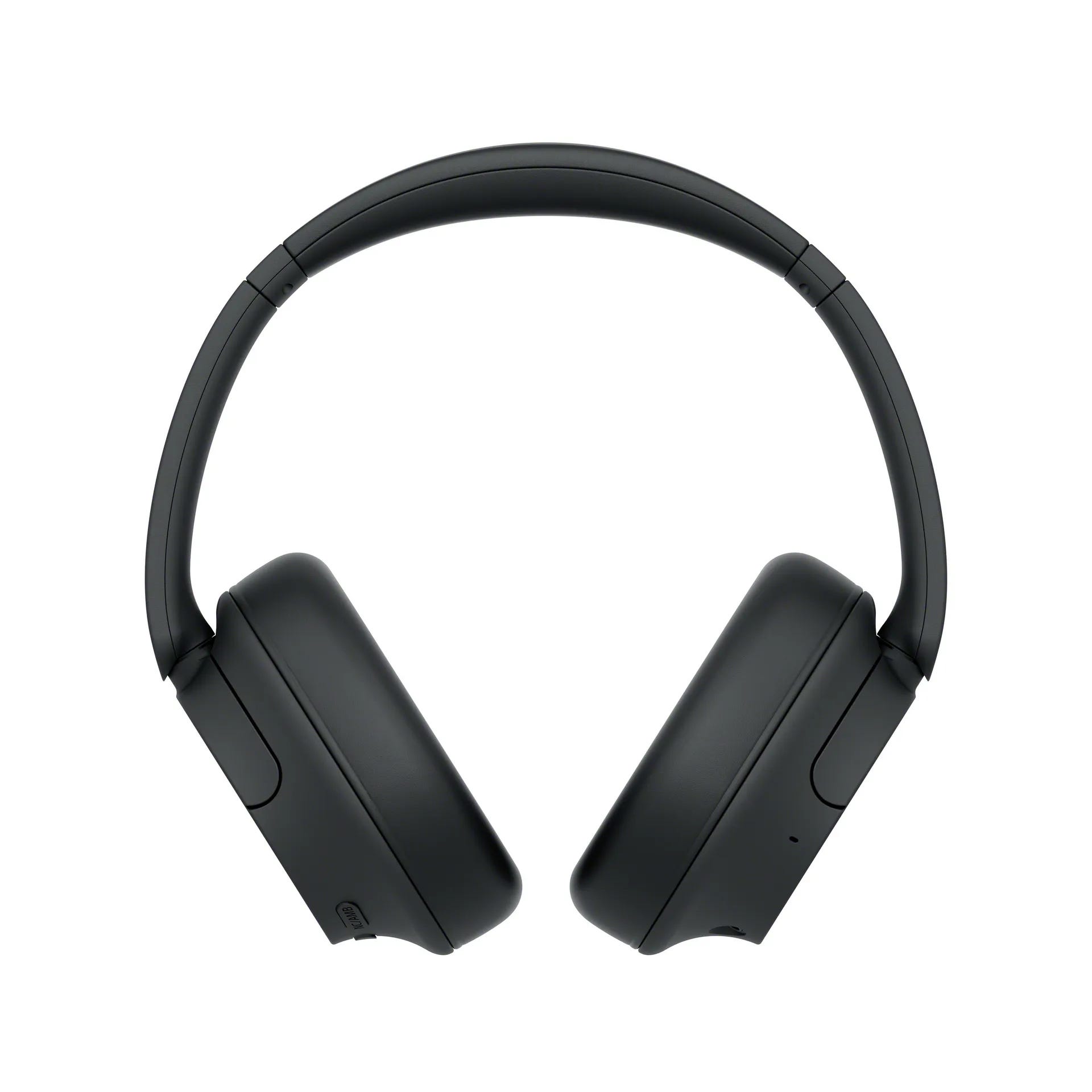
This section maps out how headphone drivers make sound, why they behave differently from speakers, the driver types you’ll encounter, and how to choose and use gear so the sub-bass slams without cooking your ears. Think practical, fact-driven guidance for listeners who care about texture as much as tune.
1 — How a driver makes sound
Headphones and speakers share the same principle: electrical motion turned into air motion. In a moving-coil driver, current runs through a coil attached to a diaphragm; the coil interacts with a magnetic field, producing force that moves the diaphragm.
What you need to know: the available force depends on current, magnetic flux density, how much conductor sits in the gap, and coil turns in the high-flux region. More usable force for the same current means tighter control — cleaner bass and less distortion at a given power. That’s why spec sheets highlight magnet geometry and coil design. (See Britannica: Lorentz force.)
2 — Headphones ≠ speakers
Headphones sit millimetres from your ear, which changes the rules.
Your pinna and ear canal act like a horn and resonator, typically boosting 2–4 kHz. Designers build around that natural lift so vocals and presence don’t sound off.
Cup volume, pad seal, and insertion depth shift bass response dramatically — a tiny leak can make sub vanish or boom.
Quick check: adjust pads or tips while listening. The seal on your ear matters more than a spec sheet curve.
3 — Driver types in plain language
Dynamic (moving-coil): the standard. Efficient, punchy, common in consumer cans and many IEMs. Solid for portable bass.
Planar magnetic: thin diaphragm driven across magnet arrays. Smooth mids, disciplined bass, often loved by electronic listeners. Older models demanded serious power; newer ones vary — check sensitivity.
Electrostatic: charged diaphragm suspended between stators. Incredibly fast and detailed. Practical catch: they need energizers and bias voltages in the hundreds of volts (many Stax units ≈ 580 V). Not portable.
MEMS & micro-drivers: tiny fabricated units for ultra-compact earbuds. Precise, but full-range bass still favours larger drivers.
4 — Priorities for electronic music
If your library leans on kicks, subs, and layered synths:
Bass extension with control. Look for response below ~50 Hz to capture true sub fundamentals.
Transient clarity. Percussive sounds need fast diaphragms and strong motor control.
Presence without glare. A mild presence lift helps detail cut through; harsh 2–6 kHz peaks cause fatigue. Harman’s research shows listeners prefer shaped, not jagged, response curves.
V-shaped tuning. Fun, but it buries midrange. For analysis or DJ use, balance matters.
5 — Source, sensitivity, impedance
Pocket rigs: favour low-impedance, higher-sensitivity models (≈16–64 Ω) to get volume from phones.
Desktop rigs: with amps/DACs, you can drive lower-sensitivity or high-impedance planars and electrostatics.
Rule of thumb: specs are guides, but audition with your own tracks before deciding.
6 — Open, closed, or IEM
Closed-back: isolates, boosts perceived bass — best for travel.
Open-back: wider stage, less boom — best at home.
IEMs: maximum isolation and tactile bass, but tonal balance shifts with fit.
If your commute is more rumble than rhythm, closed designs or sealed IEMs will outperform open-backs.
7 — Protect your ears
Loud listening is cumulative. NIOSH’s REL: 85 dBA for 8 hours. High-volume, bass-heavy sessions stack up over time.
Practical moves: aim for 70–85 dBA for sustained use, let ANC reduce ambient noise so you don’t crank it, and take breaks. Ears tire before the brain admits it.
8 — Buying checklist for power listeners
Driver type — try both dynamics and planars.
Bass extension — response down to ≤50 Hz is ideal.
Sensitivity / impedance — match to your source.
Open vs closed — decide by listening context.
Comfort — poor clamp kills sessions.
Amp needs — budget if required.
Test with your tracks.
9 — A simple listening workflow
Begin flat for 5 minutes to reset.
Cue a reference track with sub-bass content.
Apply small EQ tweaks if needed — minimal boosts avoid distortion.
Break every 45–60 minutes.
10 — What’s next
Part 2 will shift to the engineer’s bench: motor design, measurements, calibration. Part 3 turns to the DJ booth: SPL management, rugged monitoring, and live rigs.
References & further reading
Britannica — Lorentz force
PubMed Central — pinna/ear-canal resonance
Harman research — headphone preference & targets
Stax notes — electrostatic bias practice (~580 V)
NIOSH / CDC — noise exposure limits
Stay curious, stay careful, keep the signal clear. — Signal Dept.
Part 2 - Producer / Studio Perspective in Edition 8 out Sat 17 Sept 2025
SIGNAL SCAN TRACK NOTES
Track Notes
Each week, Signal Scan highlights a handful of tracks worth pulling into rotation — selections that reveal how producers are shaping low-end, texture, and atmosphere across electronic subcurrents. No algorithms, just human-filtered signals.
Find these and many more tracks on the YouTube playlist: Signal Dept - Electronic Music New Releases
The playlist features songs across various genres and sub-genres of House, Tech and Electro. There are several established acts but the focus is on the lesser known artists.
1. Matthew Sona — Mystiko
Listen
Built on a subterranean groove that doesn’t let up, this one anchors its weight in the low end while layering subtle shifts on top. A study in restraint that still hits hard.
2. RX1F — Wolves
Listen
Dense textures with a widescreen feel. The production pushes outward, filling space with a kind of cinematic tension.
3. Dannow — Alone
Listen
Progressive in form and mood — a track that unfolds gradually, taking the long route into deeper terrain.
4. DjangoZa — Aurora
Listen
Light on its feet but grounded by groove, this track balances soulful melodic phrasing with playful, unexpected turns.
5. Potrvcheno — Ajdar
Listen
Minimal in motion yet heavy in presence — a tribal slow-burner that works through repetition and atmosphere rather than flash.
Closing Signal
This week’s selections lean toward groove-driven hypnosis, with each track exploring how weight and repetition can open different listening states. Together, they trace a line from deep-club propulsion (Mystiko) to late-night introspection (Alone) and the ritualistic pull of Ajdar. Signal Scan will keep watching where these currents bend next.
Signal Dept. chronicles culture that refuses commodification. Field reports and scene intel: theswingcafe@gmail.com
Find Signal Dept on Bluesky and YouTube
Share on socials, email, or directly with your music community. All issues you may copy, remix, circulate freely. Just don't sell it.
Art is a relationship, not a product. Let's build the systems it deserves.
[END OF SIGNAL DEPT. — Edition 7]
Really enjoyed this post. Why did you decide to call yourself Solarpunk Creative Systems?
Great article, informative and interesting.